We are here for you
AAC Welcomes The Modern College of Design Students!
We’re here to help make the transition clear, supportive, and centered around your creative goals—so you can keep making the work and moving your practice forward.
Art Academy of Cincinnati is committed to supporting students impacted by the closure of The Modern College of Design by providing a clear, student-centered transfer pathway designed to help students continue their education with minimal disruption.
Founded in 1869, AAC is one of the nation’s oldest independent colleges of art and design and prepares artists, designers, writers, and creative professionals through rigorous studio practice, interdisciplinary learning, and individualized mentorship.
Located in Cincinnati’s Over-the-Rhine arts district, AAC connects students directly to a vibrant creative community and professional arts ecosystem. AAC will work individually with students to support degree completion, preserve academic momentum, and create expanded pathways for artistic and professional growth.
Transfer Pathways
Students from The Modern College of Design are invited to apply for admission and transfer into the following programs at AAC:
AAC interdisciplinary structure allows students to combine studio practice with additional creative and critical studies while building individualized professional pathways in design and fine art.
Transfer Credit Evaluation
AAC will provide a comprehensive and individualized transfer credit review process designed to maximize applicable earned credits while maintaining academic integrity and accreditation standards.
AAC Will Provide:
- Individual transcript evaluations
- Priority review timelines for affected students
- Personalized academic advising and degree mapping plans outlining remaining graduation requirements
AAC will work collaboratively with each student to identify the most efficient pathway toward degree completion.
AAC’s studio-based curriculum is built around interdisciplinary learning and professional creative practice. Students work alongside practicing artists, designers, photographers, animators, and writers while developing both technical expertise and conceptual depth through hands-on making, critique, and collaboration.
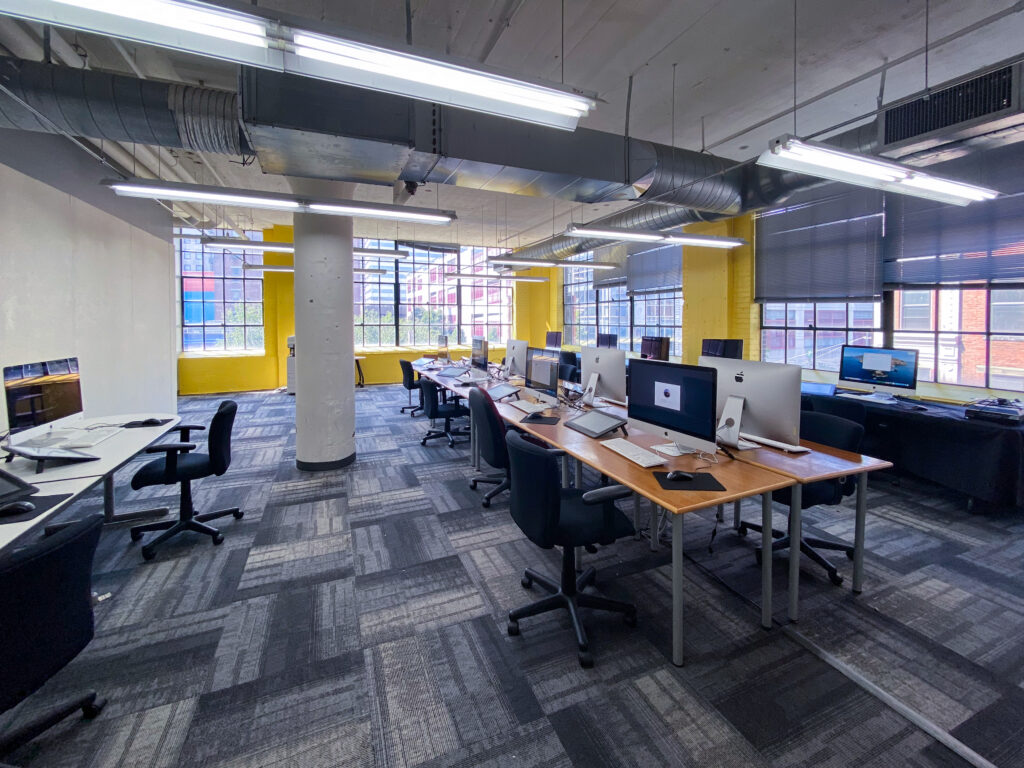
From advanced digital labs and photography studios to fabrication shops, printmaking facilities, media services, exhibition spaces, and emerging technologies like 3D printing and laser cutting, AAC gives students access to the tools and spaces needed to push ideas further and build professional creative practices.
Career Preparation & Creative Futures
AAC prepares students to build sustainable creative careers through a combination of studio rigor, liberal arts education, professional practice, and real-world experience. Students develop their work through internships, portfolio and career preparation, industry mentorship, interdisciplinary collaboration, and Senior Thesis and Capstone experiences that connect studio practice to professional goals.
AAC graduates pursue careers across design, animation, photography, fine arts, publishing, arts administration, film, education, and the broader creative industries—bringing creative thinking and artistic practice into studios, agencies, organizations, and communities around the world.
Get Started Today
1. Complete your Application
2. Submit your Portfolio
3. Send your transcripts to admissions@artacademy.edu
4. Submit your FAFSA using AAC School Code 003011
Affordability Initiatives
Transfer students from The Modern College of Design are guaranteed comprehensive scholarship opportunities up to $30,000 per academic year based on:
- Portfolio strength
- Academic achievement
- Transfer credits completed
- Program alignment and artistic potential
AAC will work individually with students and families to create affordable pathways toward degree completion.
Housing Support
To further support students during this transition, AAC will offer:
- A one-semester housing grant (valued at $4,150) for use in AAC student loft housing for eligible transfer students who are accepted and enroll at the Art Academy of Cincinnati for the Fall 2026 semester.
Located in Cincinnati’s Over-the-Rhine neighborhood, AAC Studio Lofts place students directly within the city’s creative community and across the street from AAC campus studios, and within walking distance of galleries, performance venues, coffee shops, and arts organizations.
AAC undergraduate students also benefit from:
- The AAC Tuition Promise, which freezes tuition rates up to four academic years during degree completion to provide families with long-term financial predictability.
- AAC Advantage, a Loan Repayment Assistance Program (LRAP) available to students completing a Bachelor of Fine Arts pathway entering the Art Academy of Cincinnati beginning Fall 2026. The program supports eligible AAC graduates with loan repayment assistance for new educational loans borrowed while enrolled at AAC if post-graduation income is below designated thresholds.
AAC Advantage reflects the college’s commitment to making creative education more accessible while supporting students as they build sustainable careers in the arts, design, media, and creative industries.
Additional Information
Admissions Support & Transition Services
AAC recognizes that institutional closures create uncertainty and disruption for students. This transition opportunity is designed to prioritize stability, support, and continuity.
Transfer students from The Modern College of Design will receive access to:
- Dedicated transfer admissions counseling
- Personalized academic advising
- Portfolio guidance and review support
- Financial aid counseling
- Career development resources
- Studio access and professional creative facilities
- Student success and health and wellness support services
AAC’s 9:1 student-to-faculty ratio allows for individualized mentorship and close faculty engagement throughout the transfer process.
Why AAC ?
AAC is intentionally small—and that changes everything.
With a 9:1 student-to-faculty ratio, students work closely with practicing artists, designers, writers, and mentors who know their work, challenge their ideas, and support their growth from day one through thesis.
Our studio-based environment encourages exploration across disciplines. At AAC, majors are fluid. Designers take photography. Animators explore sculpture. Writers collaborate with filmmakers. Students build a creative toolbelt that reflects how artists actually work today—interdisciplinary, adaptable, and deeply connected to contemporary practice.
This is a place where experimentation is expected, where process matters, and where students are encouraged to push beyond a single medium to discover what their work can become.
AAC also understands the importance of financial predictability and long-term support. Through the AAC Tuition Promise, undergraduate tuition remains locked at the same rate for four academic years, helping students and families plan with confidence throughout their education.
Most importantly, AAC understands what it means to support students during moments of transition.
When Memphis College of Art closed in 2020, students looked for a place where they could continue building their creative futures without losing momentum. One of those students, Nytaya Babbitt, transferred to AAC, continued developing her practice, and graduated as valedictorian in 2022.
Today, she lives and works in Cincinnati, organizing community and adult programming at the Contemporary Arts Center—one of the city’s leading contemporary arts institutions.
Her story reflects what AAC believes deeply: your creative path does not end because circumstances change. Sometimes, it opens something entirely new.


Cincinnati isn’t just where AAC is located—it’s part of the creative experience.
Known locally as Cincy, the city has long been a place where artists, designers, musicians, writers, and makers shape culture in visible, meaningful ways. Creativity here isn’t tucked into one neighborhood or limited to a single scene. It moves through the entire city—from independent galleries and murals to major museums, music venues, design firms, public art projects, and community festivals.
AAC sits in the center of Over-the-Rhine, one of the country’s most vibrant arts districts, where students are surrounded by creative energy the moment they step outside the studio. This is a city that expects you to show up, make the work, and become part of it.
Cincinnati is also home to major companies including Kroger, Procter & Gamble, and Fifth Third Bank, alongside a growing network of creative agencies, startups, nonprofits, galleries, and cultural organizations. AAC alumni work across these industries, bringing creative thinking, design, storytelling, animation, photography, and artistic practice into professional spaces throughout the region and beyond.
Life in Cincinnati offers students room to explore, connect, and build community outside the classroom. Weekends might include walking through Findlay Market, spending time along the Ohio Riverfront at Smale Park, exploring the city’s extensive park system, attending festivals and concerts, catching a Reds, Bengals, or FC Cincinnati game, visiting the Cincinnati Art Museum or Contemporary Arts Center, or simply hopping on the free streetcar to explore downtown neighborhoods, coffee shops, studios, and creative spaces.
Cincinnati combines the energy of a major creative city with the accessibility and community connection that allows artists to truly build a life here. For many AAC students, the city becomes more than a backdrop—it becomes part of their practice, their network, and their future.
Cincinnati is the number-one city in the U.S. for street and mural art.
The Human Rights Campaign gave Cincinnati a perfect score in their annual LGBTQ+ equality survey.
In 2022, SmartAsset ranked Cincinnati as the best U.S. city for new college graduates for the fourth year in a row.
The cost of living in Cincinnati is 11.7 percent lower than the national average.
The average cost of a one-bedroom apartment in Cincinnati is $990.